 English
 German
 Korea
Korea Spanish
A Strategic Guide to Chinese Social Media for Western B2B Leaders
- On December 19, 2025
- china B2B social marketing, china social marketing
Introduction: Entering China’s Parallel Digital Universe
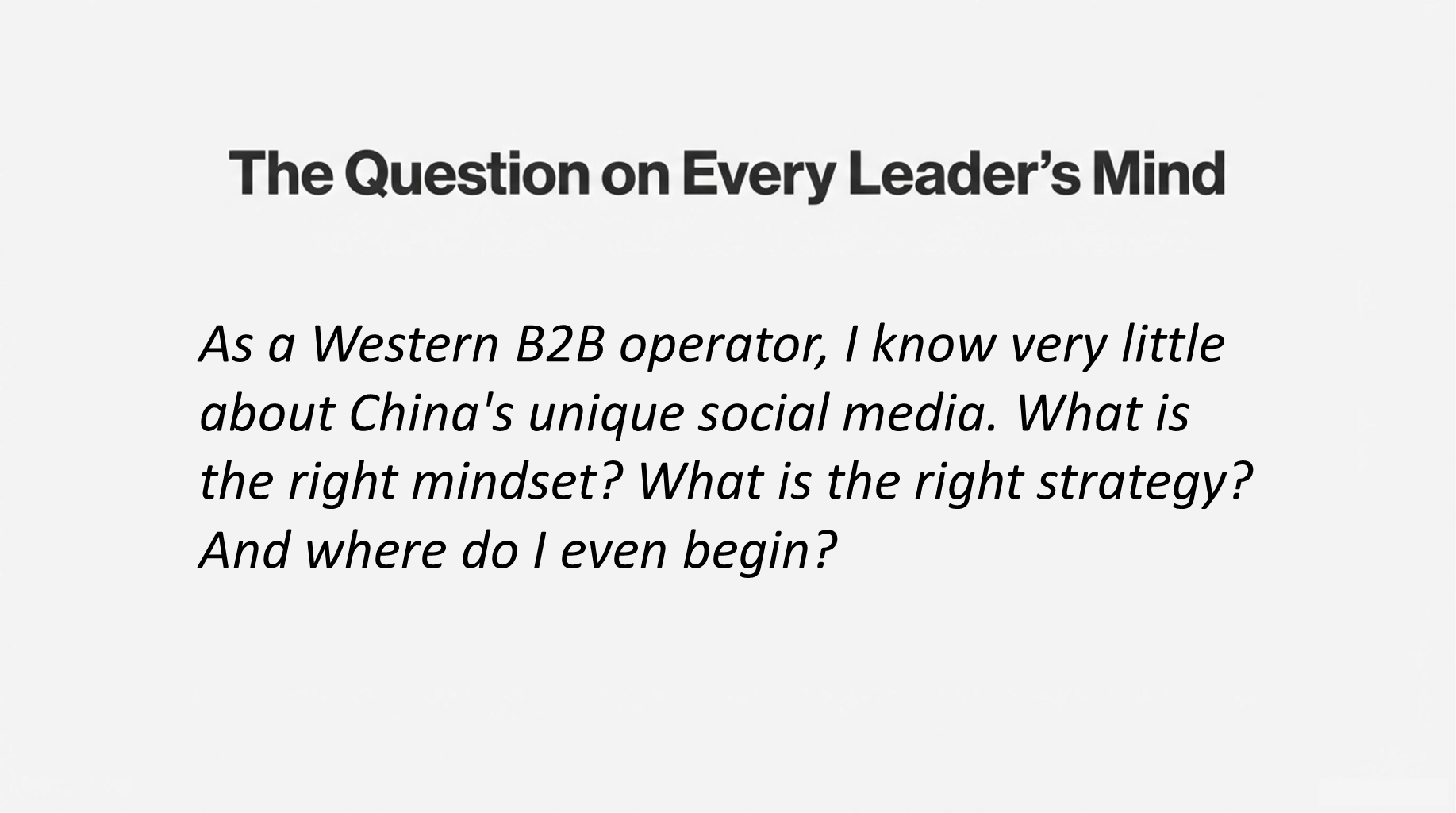
For any Western B2B leader looking east, the Chinese digital landscape can appear daunting. It is a completely isolated ecosystem, a “parallel digital universe” that operates without Google, Meta, or any of the platforms that form the bedrock of Western marketing strategy. This guide is designed to demystify this complex environment. It provides a clear, strategic framework for understanding the fundamental differences in the market, choosing the right platforms for your business, and crafting an effective entry strategy. Our goal is to transform your confusion into a confident, actionable plan for success.
1. The Great Firewall of Perception: Why China’s Digital Model is Fundamentally Different
Before selecting a platform, it is critical to understand that the digital philosophy and user behavior in China are fundamentally different from those in the West. Simple one-to-one comparisons, such as “Weibo is the Chinese Twitter,” are misleading and will inevitably lead to flawed strategies. The entire user journey—from discovery to purchase—has been reimagined within a distinct, mobile-first, and highly integrated ecosystem. The following table outlines the core conceptual shifts you must grasp.
Contrasting Digital Ecosystems: The West vs. China
| Dimension | Western Traditional Model | Chinese Social Media Model |
| Traffic Entry Point | Primarily driven by search (Google) and distinct social platforms (Meta). | Dominated by “Super Apps” like WeChat and Douyin, which serve as all-in-one portals. |
| Primary Content Form | Dominated by static text and images, with long-form video as a secondary format. | Primarily driven by short video, livestreaming, and interactive visual notes. |
| Core Marketing Philosophy | Focused on brand storytelling and building a narrative over time. | Heavily focused on immediate effect conversion, particularly through live commerce. |
| Data Management Approach | Characterized by open APIs, allowing for relatively easy data integration. | Dominated by “walled gardens,” where platforms are closed ecosystems with strict data controls. |
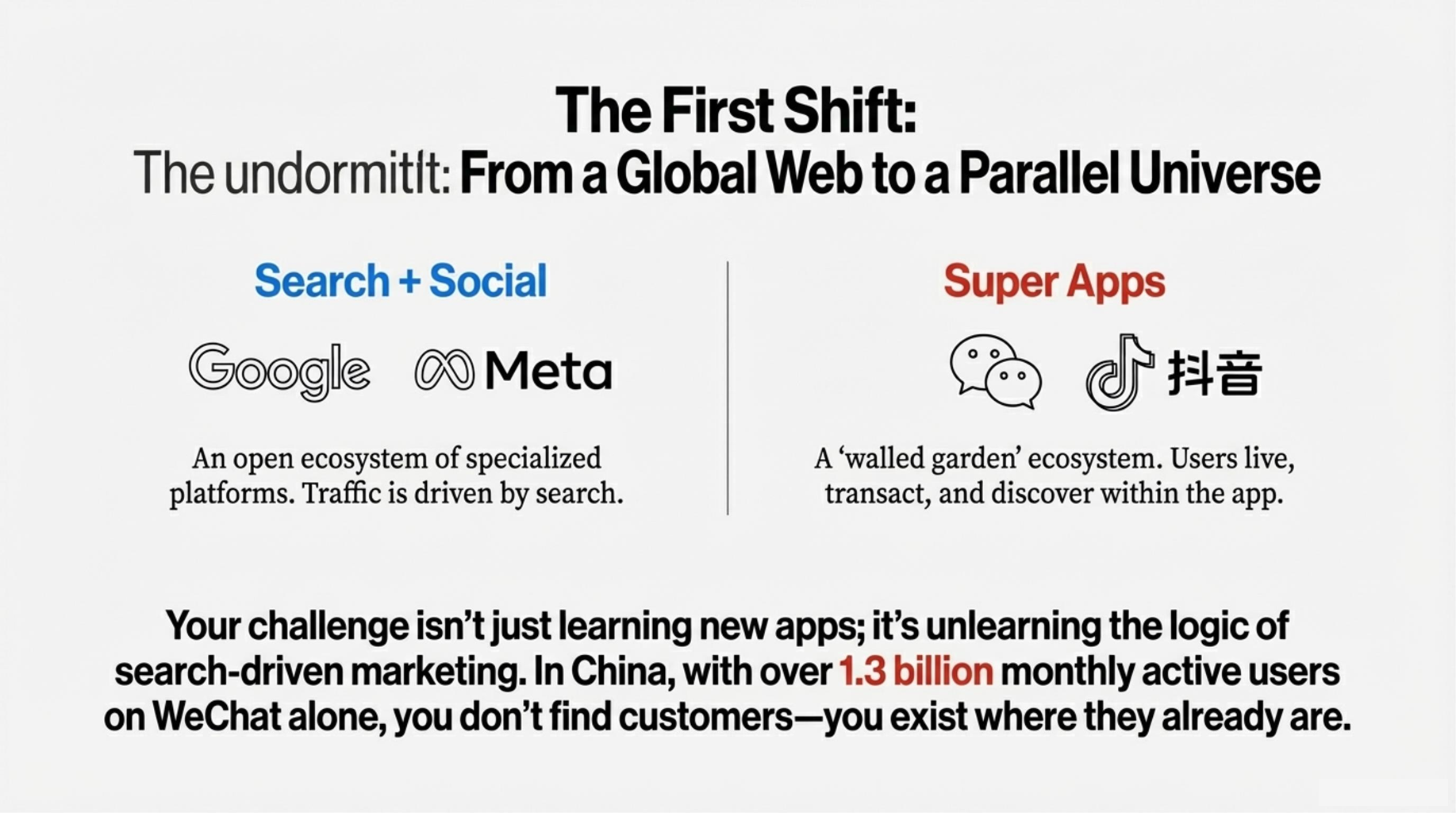
This “walled garden” approach is not just a philosophical difference; it creates significant technical and legal hurdles for data integration, a critical challenge. With this foundational understanding of the unique digital terrain, the next logical step is to map the specific platforms that are most relevant to a B2B business.
2. Mapping the Terrain: Choosing Your B2B Beachhead in China
The core principle for platform selection in China is simple: “Go where your users are.” Unlike in the West, where a few major platforms dominate most professional and consumer interactions, China has a diverse ecosystem where different platforms serve distinct user bases and purposes. This section analyzes the most relevant platforms through a B2B lens to help you establish your initial presence.
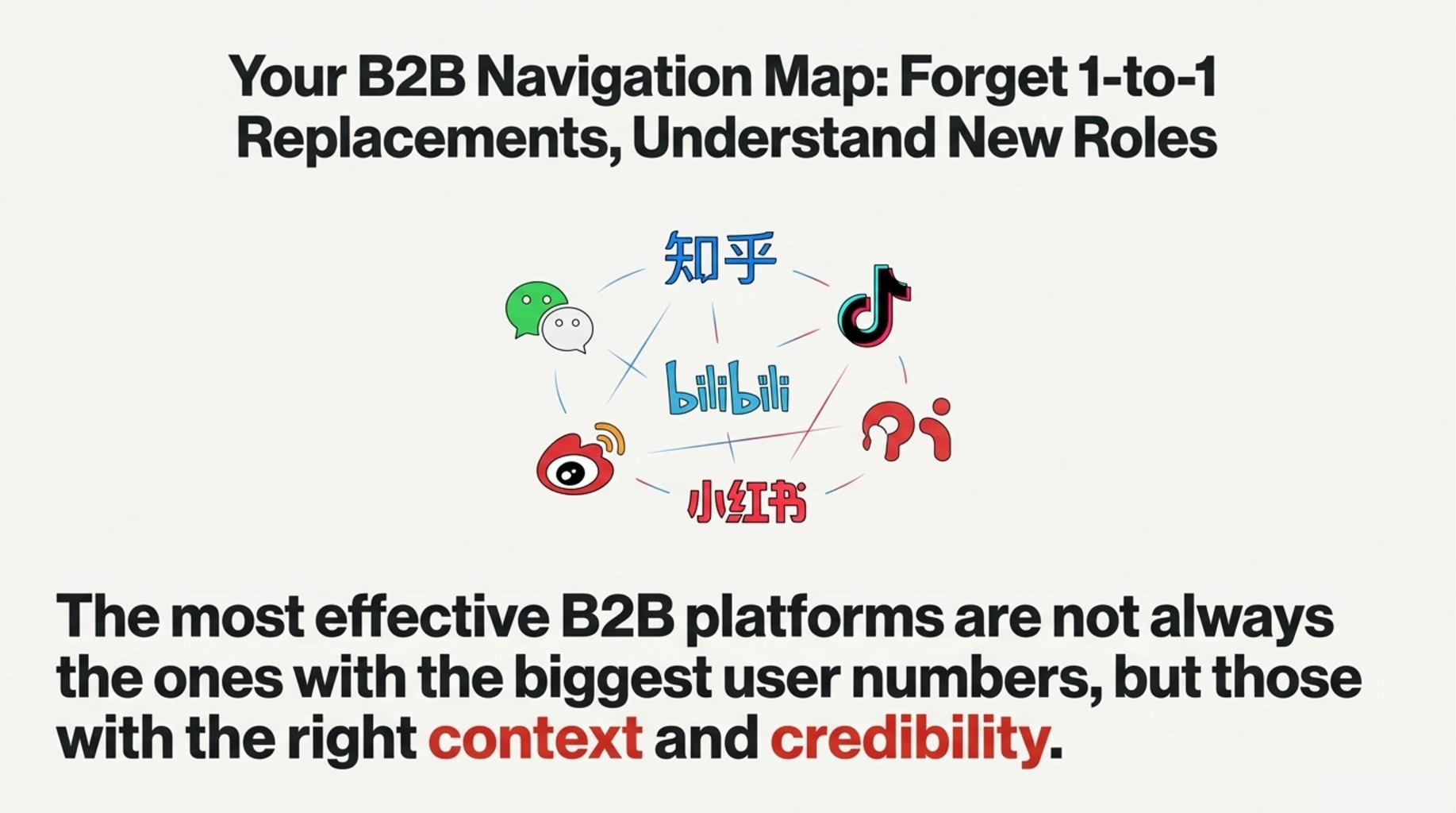
2.1 The B2B Powerhouses: Building Credibility and Nurturing Leads
These platforms are the essential foundation for any serious B2B effort in China, ideal for establishing professional credibility and managing customer relationships.
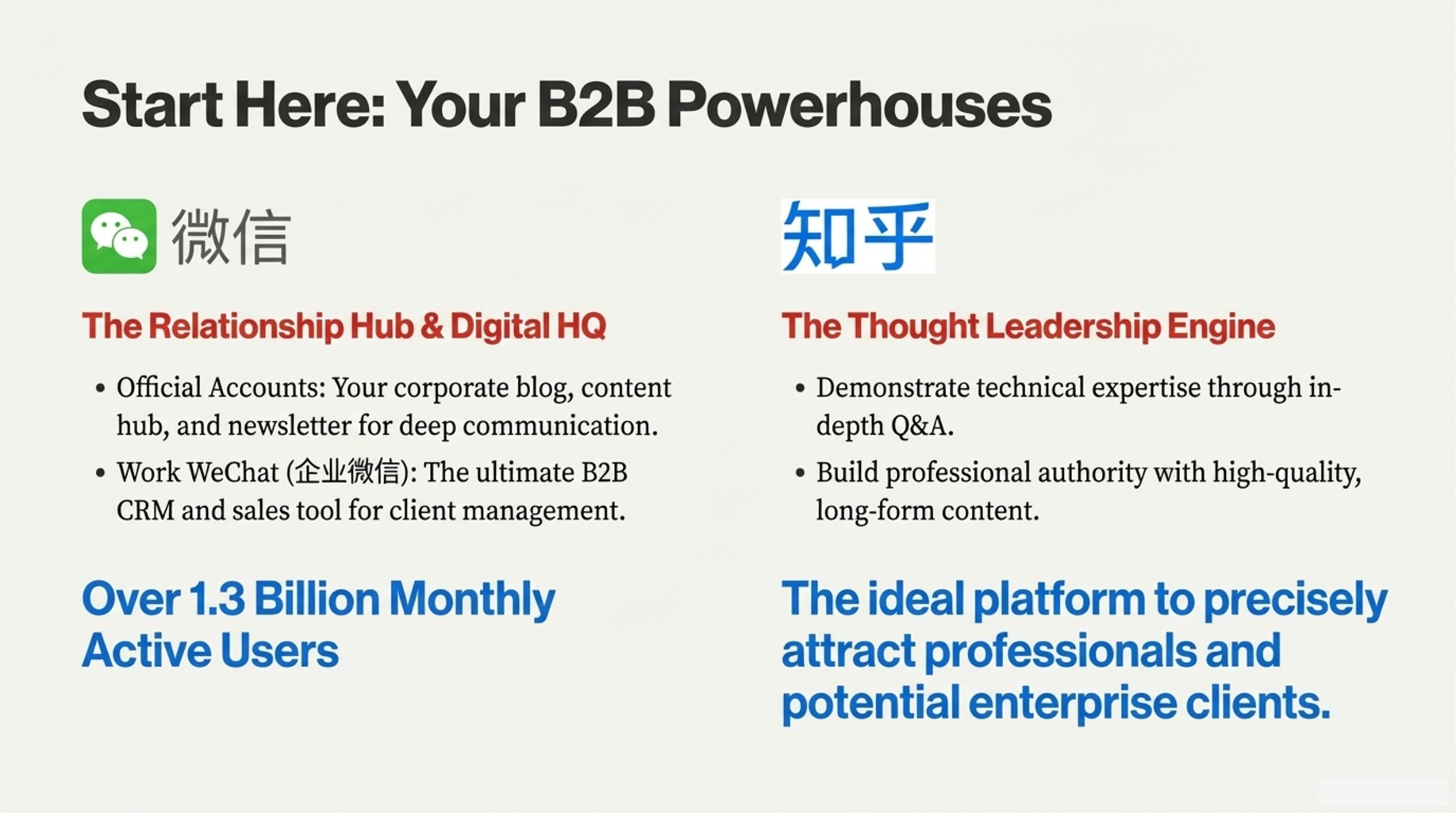
2.1.1 The WeChat Ecosystem:
- Role: The central nervous system of Chinese business communication, essential for “deep communication” and long-term customer relationship management.
- B2B Use Case: Its Official Accounts serve as the primary hub for publishing articles, case studies, and corporate updates. It is the cornerstone of “private domain operations,” allowing you to build direct relationships with customers away from public feeds.
- Strategic Implication: Neglecting WeChat is akin to not having a corporate website or CRM in the West; it is the non-negotiable foundation for long-term customer value in China.
2.1.2 Zhihu:
- Role: China’s premier Q&A community, ideal for establishing thought leadership.
- Audience: Attracts a high-quality, professional user base actively seeking expert answers and technical solutions.
- B2B Use Case: Gain traction by providing detailed answers to industry-specific questions, publishing in-depth articles, and demonstrating technical expertise to reach decision-makers. ◦ Strategic Implication: For complex B2B products, Zhihu is where you win the technical argument, influencing the engineers and managers who will champion your solution internally.
2.2 The Visual Frontier: Demonstrating Products and Building Awareness
Short-video apps have become a powerful tool for visually demonstrating value and reaching a broad audience of potential customers and industry talent.
2.2.1 Douyin:
- Role: A mass-market awareness engine with unparalleled reach, boasting over 500 million daily active users.
- B2B Use Case: Ideal for B2B companies with visually compelling products (e.g., machinery, software interfaces) to showcase product demonstrations, virtual factory tours, and expert knowledge sharing.
- Strategic Implication: Douyin is your tool for making complex B2B products accessible and memorable, building top-of-funnel awareness at a scale no other platform can match.
2.2.2 Kuaishou:
- Role: A high-trust community platform with deep penetration into China’s lower-tier cities.
- B2B Use Case: Its “老铁经济” (Old Pal Economy) fosters high community trust, making it a powerful channel for B2B companies targeting industries like agriculture or manufacturing to build authentic connections through genuine, unpolished content. This high trust translates into commercial power; in 2025, Kuaishou’s brand合约广告消耗 (brand contract ad spend) saw continuous quarterly growth, signaling increasing advertiser confidence.
- Strategic Implication: Kuaishou is where you build grassroots credibility in industrial heartlands, bypassing traditional corporate messaging to connect directly with end-users and regional distributors.
2.3 The Niche Communities: Engaging Specialized Audiences
For B2B companies in specific, tech-forward sectors, niche platforms offer direct access to highly engaged and knowledgeable communities.
2.3.1 Bilibili (B站):
- Role: A hub for young, highly educated users with a passion for deep-dive content.
- Audience: An astonishing 82% of its users come from 985 universities (China’s Ivy League equivalent), and they spend over 108 minutes on the app daily. This engagement is exceptionally durable; Bilibili boasts a 10-year user retention rate of 84% and a 15-year rate of 90%.
- B2B Use Case: High-potential for companies in technology, internet, design, and animation to attract professionals and top talent by creating in-depth tutorials, technical explainers, and product reviews.
- Strategic Implication: For tech-focused B2B firms, Bilibili is not just a marketing channel but a long-term talent acquisition and employer branding battleground, engaging the next generation of industry leaders before they even enter the workforce.
2.4 The Public Square: Brand Building and Public Relations
This platform is less about direct lead generation and more about managing your public brand image and participating in broader industry conversations.
2.4.1 Weibo:
- Role: An “open social media plaza” for event marketing, official announcements, and public relations.
- Audience: While its direct B2B role is limited, it remains critical for brand perception, especially among younger demographics. In 2024, 49% of new internet users were 10-19 years old, a group heavily influenced by Weibo’s entertainment and trend-setting content.
- B2B Use Case: Indispensable for building broad brand awareness, engaging with industry news, and managing your corporate reputation on a national scale.
- Strategic Implication: Weibo is your corporate megaphone and your crisis management command center; it’s where your brand’s public reputation is won or lost. Having chosen your initial platforms, you must now adopt the unique marketing tactics required to succeed on them.
3. The New Rules of Engagement: Core Strategic Shifts for B2B Success
Simply being present on Chinese platforms is not enough. Success requires a profound shift away from Western marketing norms toward China’s unique “rules of engagement.” We break down the three most critical strategic adjustments your business must make.
3.1 Beyond Translation: The Imperative of “Transcreation”
The most common mistake Western brands make is simply translating their global marketing copy into Mandarin. This fails to account for deep cultural nuances and can lead to messaging that is, at best, ineffective and, at worst, a public relations crisis.
Transcreation is the process of adapting a message from one culture to another while maintaining its original intent, style, and tone. It’s not just about changing words; it’s about reframing concepts. For example, a marketing campaign centered on the Western value of “individualism” may need to be adapted to resonate with Chinese cultural themes of “family, social harmony, or circle culture.” This cultural fluency is essential for building genuine connections and avoiding costly missteps.
3.2 The “Discover and Buy” Economy: Embracing Social Commerce
In the West, the path to purchase is often linear: a customer sees an ad on social media, clicks to a website, and completes the transaction there. In China, the philosophy is “discovery is purchase.”
The “Social + E-commerce” model is deeply integrated into every major platform. Users expect to complete a transaction within the app where they discovered the product. This means leveraging closed-loop transaction features like Douyin live streams that link directly to a shopping cart or WeChat Mini Programs that function as full-fledged e-commerce stores. Directing users to an external website, a common practice in the West, will cause a significant loss in conversions. Furthermore, customer service expectations are radically different; Chinese customers expect “秒回” (instant replies) via platform chat, not a 24-hour email response window.
3.3 Mastering the Influence Economy: From KOLs to KOCs
Influencer marketing is a global phenomenon, but its scale and impact are magnified in China. Key Opinion Leaders (KOLs) wield enormous influence and can drive substantial sales. The scale of this economy is immense: on a single platform like Bilibili, over 3.1 million creators earned income in 2024, with average monthly commercial orders growing by 28%. However, Western leaders are often anxious about data authenticity, with valid concerns over “zombie fans” and inflated engagement metrics (“brushing volume”).
A significant trend for 2025 and beyond is a strategic shift away from expensive, top-tier KOLs toward managing thousands of Key Opinion Consumers (KOCs). These are everyday users with smaller, highly engaged followings who provide authentic, trusted reviews. A well-managed KOC strategy can deliver low-cost, high-trust marketing that builds grassroots credibility far more effectively than a single, high-cost celebrity endorsement. This shift towards KOCs finds its most natural home on platforms like Kuaishou, where the “老铁经济” (Old Pal Economy) has already cultivated a high-trust environment ripe for authentic, peer-to-peer recommendations.
These strategic shifts are essential, but they must be implemented on a solid operational and legal foundation.
4. Navigating the Labyrinth: Compliance, Regulation, and Technical Hurdles
For any Western business leader, understanding the operational and regulatory landscape is a top priority. Overlooking these foundational elements can halt your strategy before it even begins. We outline the key compliance and technical barriers that must be addressed from day one.
- Data Security and Privacy: China’s Personal Information Protection Law (PIPL) is one of the strictest data privacy regulations in the world. A primary challenge is understanding how to collect and use customer data in a compliant manner. Furthermore, integrating fan data from Chinese social platforms with global CRM systems is technically difficult and fraught with legal restrictions on cross-border data transfer.
- Content Censorship and Governance: The Chinese government maintains strict control over digital content. Foreign companies face a steep learning curve in navigating “sensitive words” and understanding which social, political, and historical topics are permissible to engage with. A misstep in this area can lead to account suspension or removal.
- Technical and Administrative Barriers: The practical hurdles to simply getting started are significant. Registering official corporate accounts on platforms like WeChat and Weibo requires a Chinese business license. Operating a website often requires an ICP license. Most importantly, to participate in the social commerce ecosystem, you must integrate with local payment gateways like WeChat Pay and Alipay, as foreign credit cards are not widely used for online transactions.
Navigating these challenges requires expert guidance, but you can begin your journey with a clear, phased approach.
5. Your First Move: A Phased Approach to Entering the Market
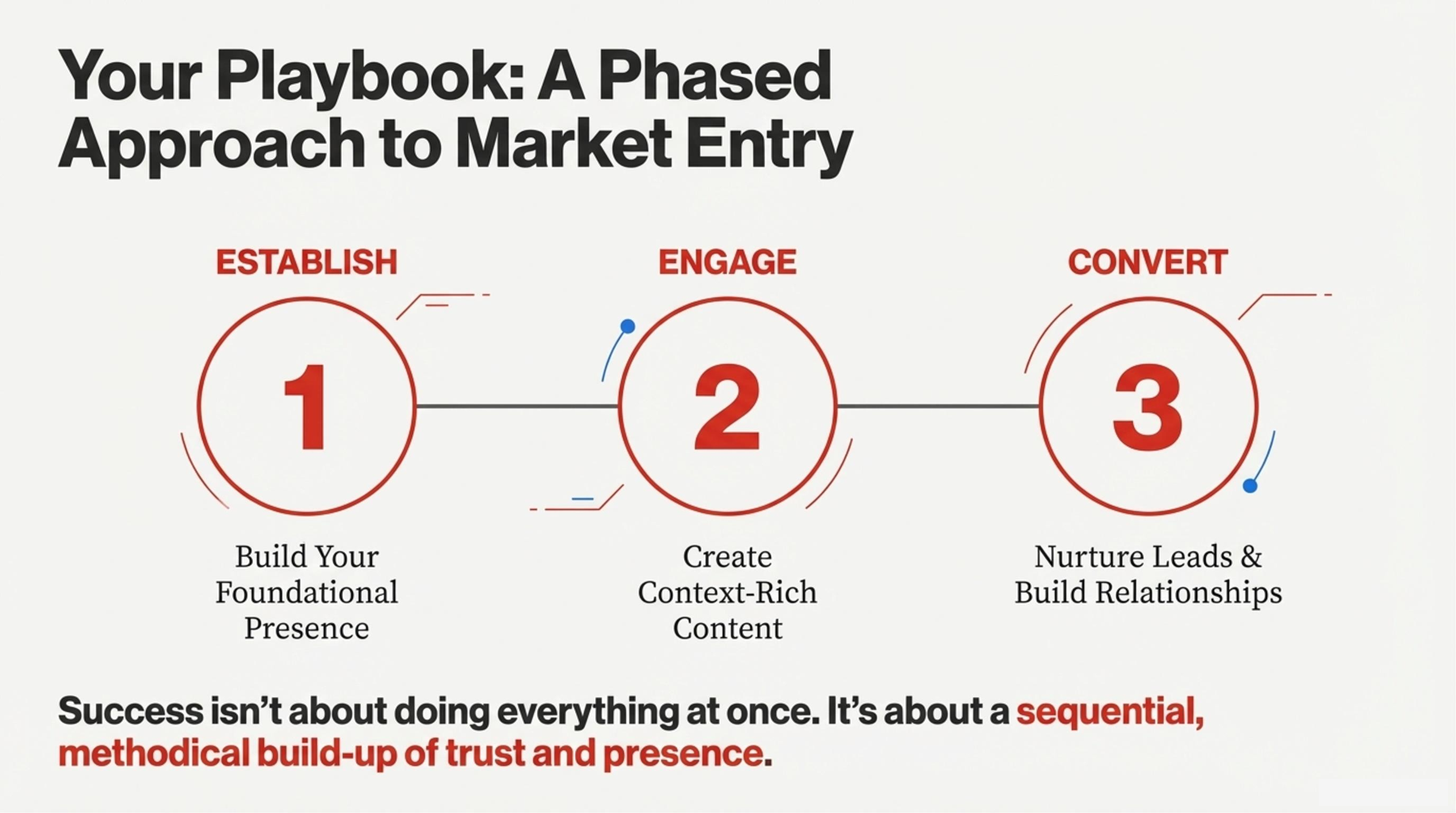
Faced with this complexity, the most common question is: “How should I start?” The answer is not to launch on every platform at once, but to follow a practical, phased roadmap to make a deliberate and intelligent entry into the market.
Phase 1: Strategic Reconnaissance (Listen and Learn)
Your first step should be to research, not to post. Before creating a single piece of content, use third-party data platforms like 新榜 (NewRank) to analyze the landscape. Study your competitors, identify the leading B2B accounts in your industry, and observe their content strategies. This initial listening phase will provide invaluable inspiration for your own platform choices and content direction, saving you from costly trial and error.
Phase 2: Establish a Foundation (The B2B Core)
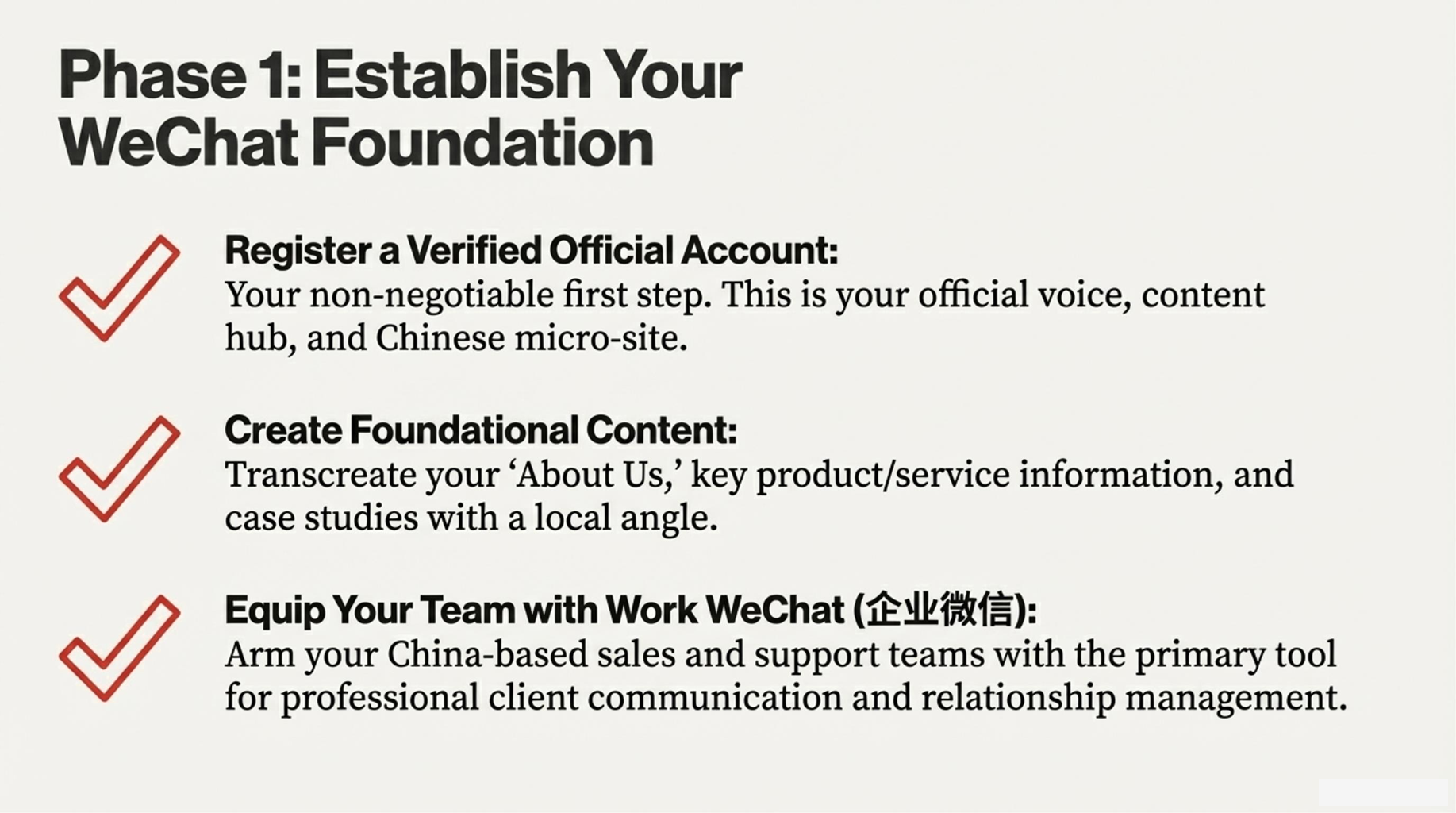
Begin your active presence by focusing on the “B2B Powerhouses” identified earlier. Specifically, your first and most critical asset should be a WeChat Official Account. This will serve as your central hub for publishing high-value content, engaging in deep communication with prospects, and nurturing leads. Consider this your foundational asset for building long-term customer relationships in China.
Phase 3: Experiment and Expand (Pilot Programs)
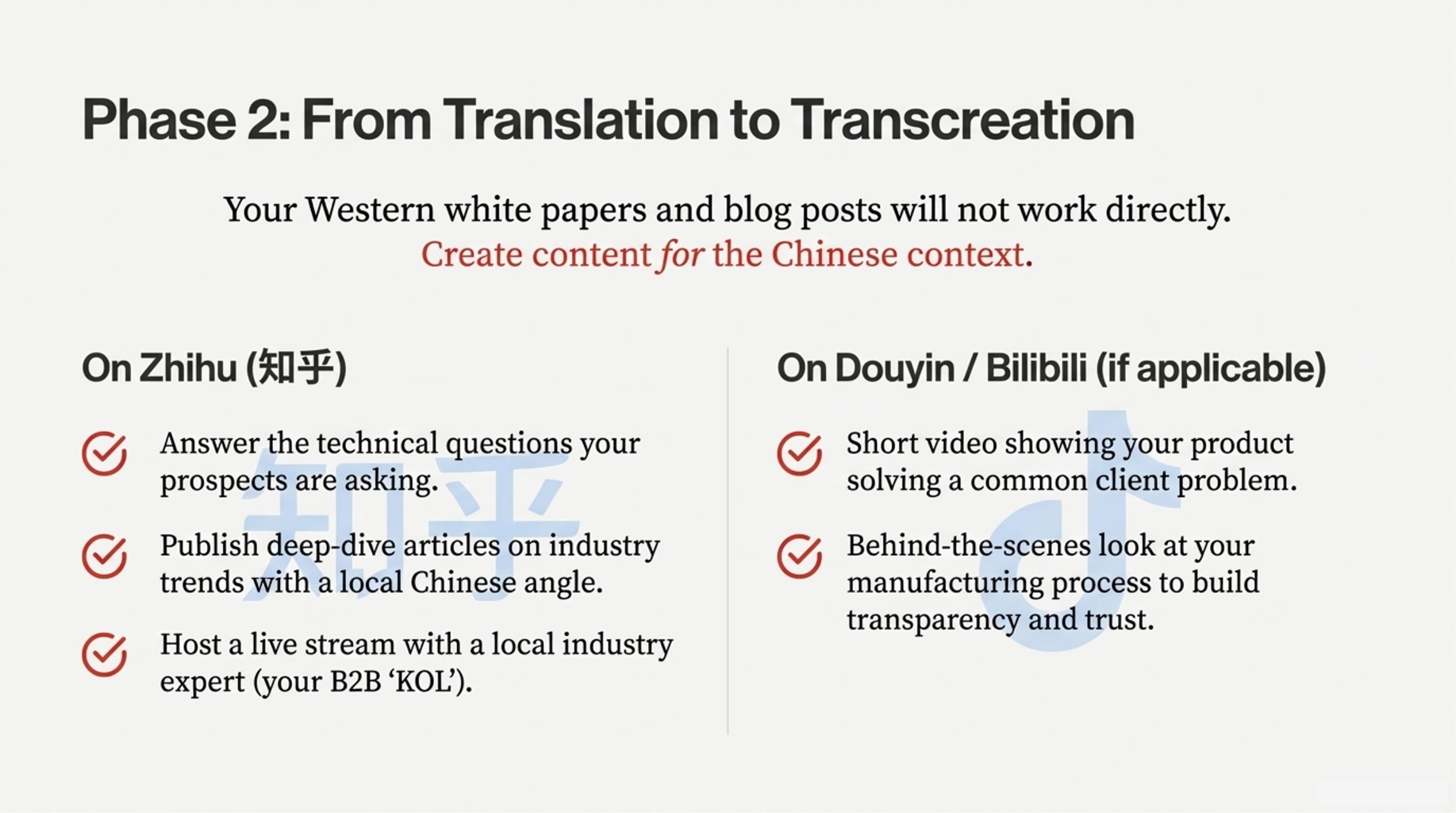
Once your WeChat foundation is solid, launch a pilot program on one additional platform that aligns with your specific industry and strengths. This allows you to test the waters and gather data before making a larger investment.
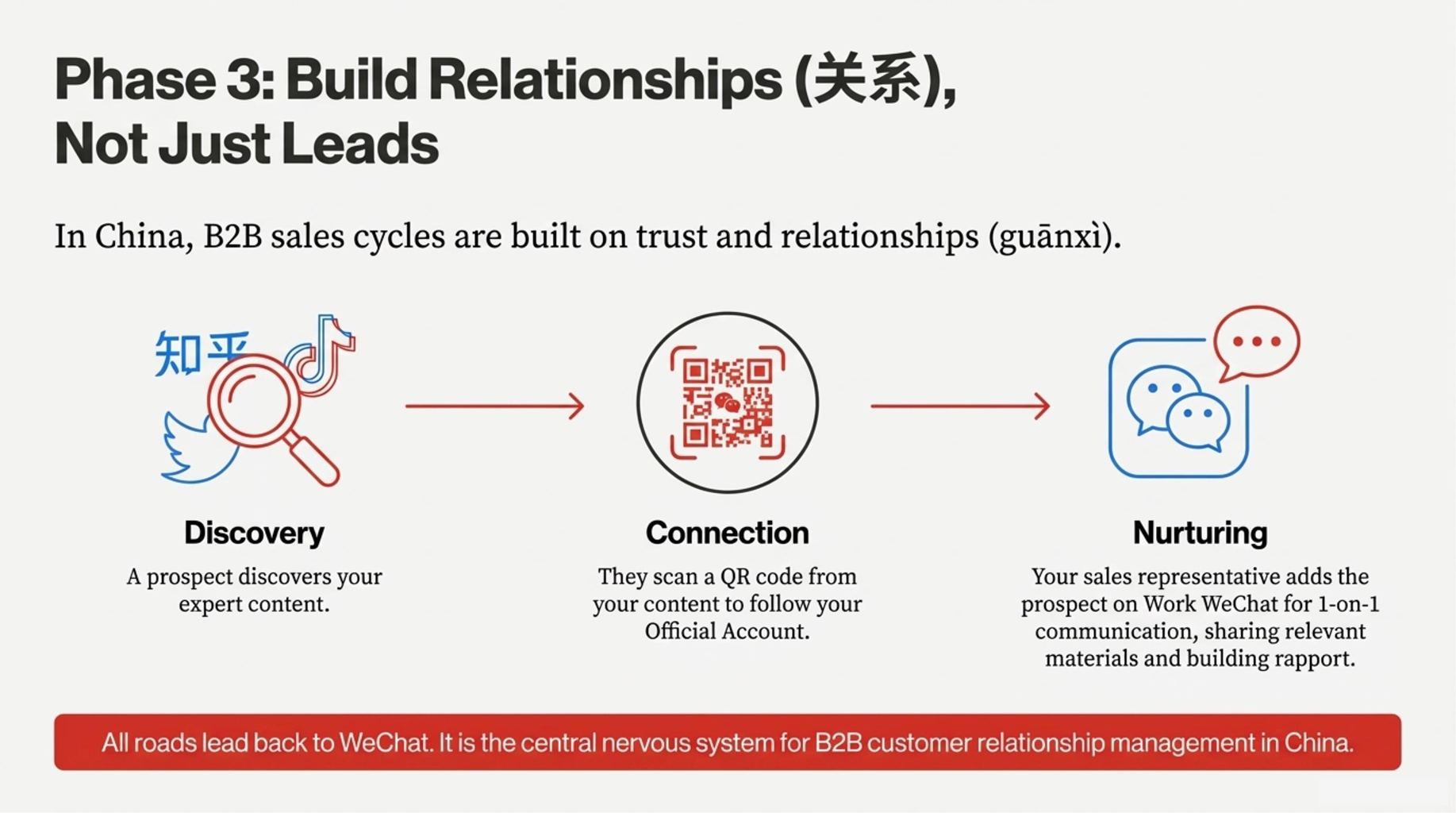
- For a B2B company with a highly visual product (e.g., specialized machinery, architectural materials), a pilot program creating short demonstration videos on Douyin would be a logical next step.
- For a company focused on deep technology or professional services, a pilot program publishing thought leadership articles and answering technical questions on Zhihu would be more appropriate.
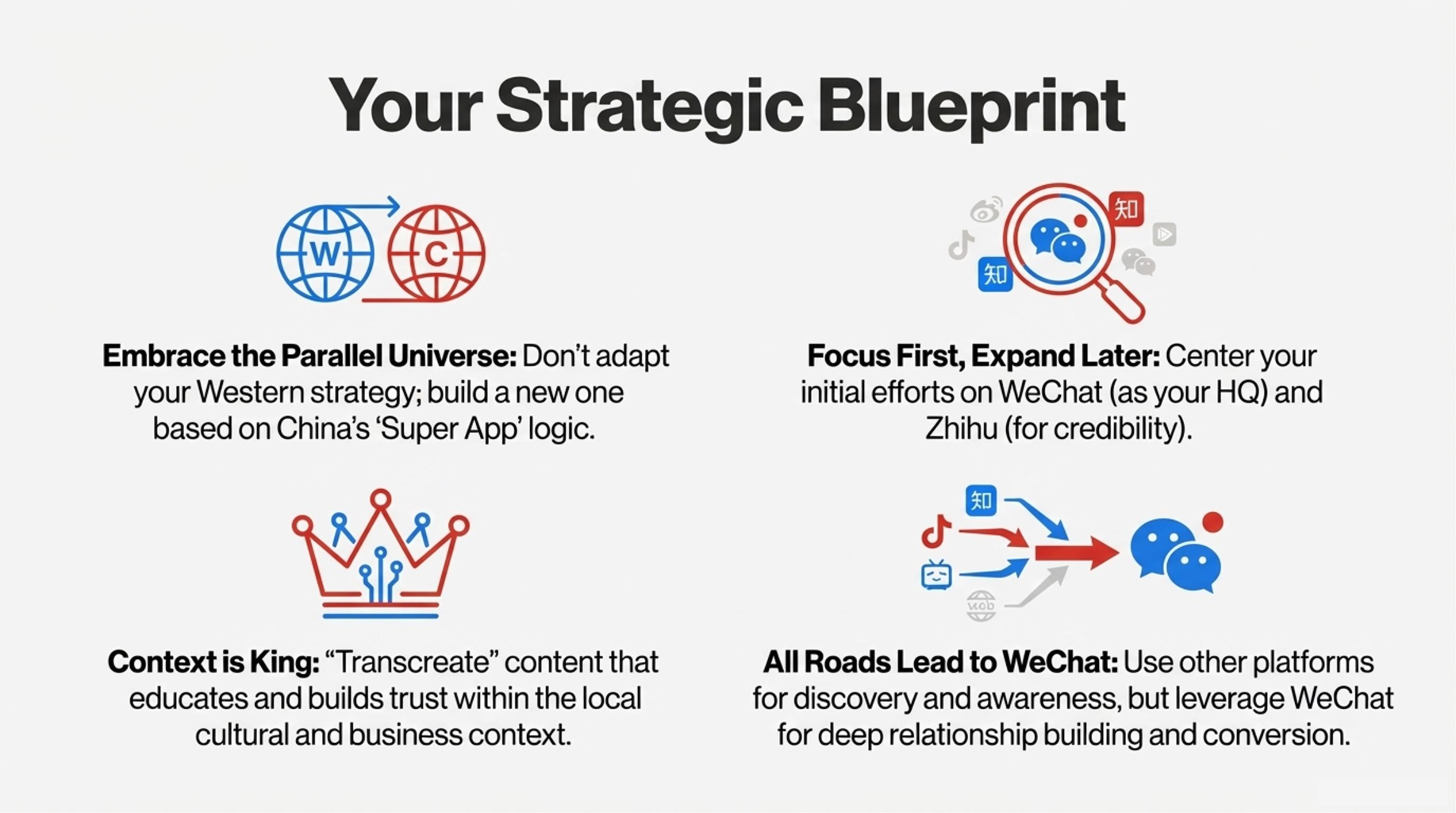
Ultimately, success in China requires a fundamental mindset shift. You must move from a model of global standardization to one of deep localization, viewing the market not as a collection of marketing channels to be filled, but as a complex, interconnected ecosystem to be understood. A thoughtful, phased, and culturally aware approach is the definitive key to unlocking long-term growth and success.
 Unlock 2026's China Digital Marketing Mastery!